
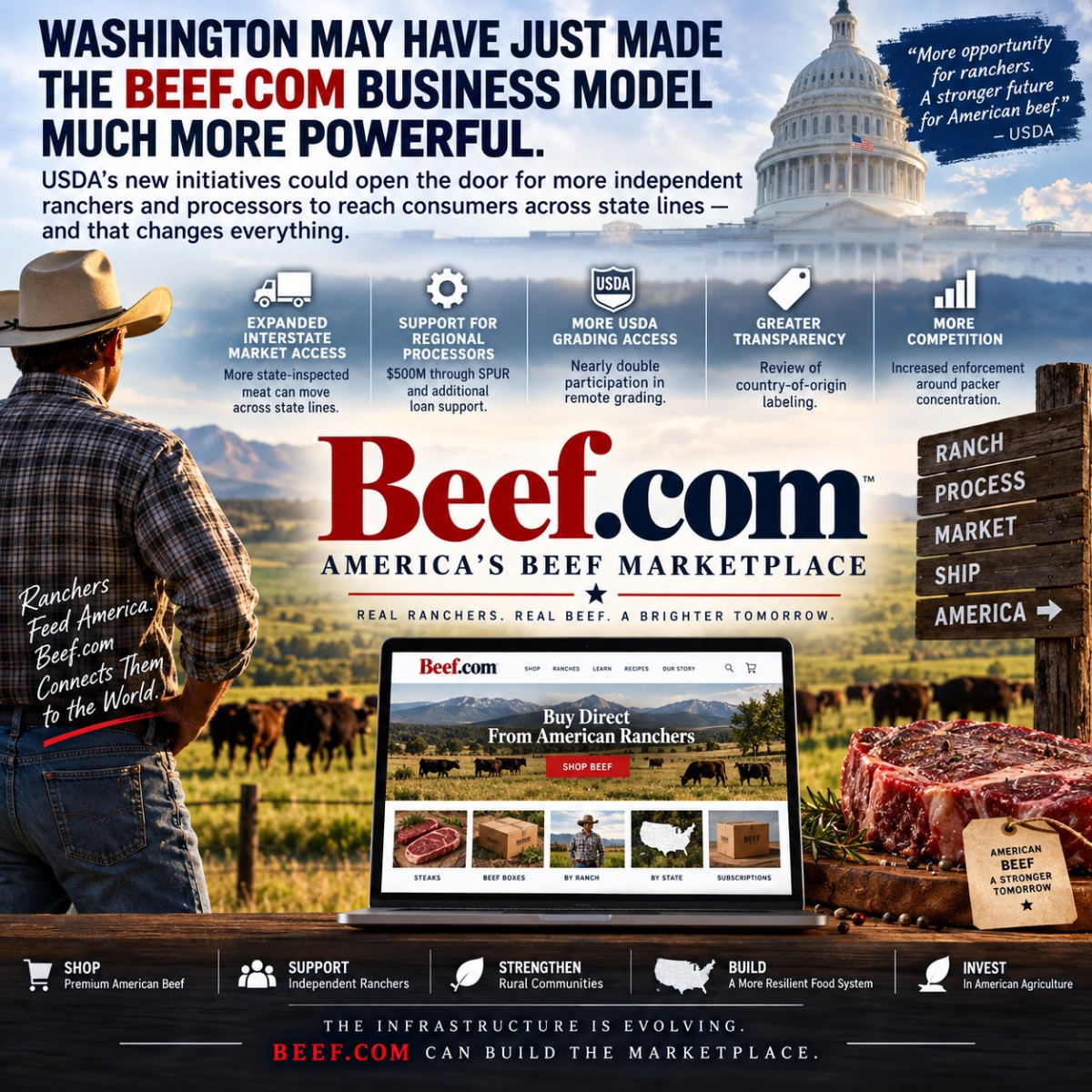
September 5, 2026 – 𝗪𝗔𝗦𝗛𝗜𝗡𝗚𝗧𝗢𝗡 𝗠𝗔𝗬 𝗛𝗔𝗩𝗘 𝗝𝗨𝗦𝗧 𝗠𝗔𝗗𝗘 𝗧𝗛𝗘 𝗕𝗘𝗘𝗙.𝗖𝗢𝗠 𝗕𝗨𝗦𝗜𝗡𝗘𝗦𝗦 𝗠𝗢𝗗𝗘𝗟 𝗠𝗨𝗖𝗛 𝗠𝗢𝗥𝗘 𝗣𝗢𝗪𝗘𝗥𝗙𝗨𝗟.
Yesterday, USDA announced a series of major initiatives affecting American ranchers, independent meat processors and the way beef can reach consumers.
For anyone thinking about the future of Beef.com, one provision jumped off the page at me:
𝗨𝗦𝗗𝗔 𝗵𝗮𝘀 𝗯𝗲𝗲𝗻 𝗱𝗶𝗿𝗲𝗰𝘁𝗲𝗱 𝘁𝗼 𝗲𝘅𝗽𝗮𝗻𝗱 𝗽𝗿𝗼𝗴𝗿𝗮𝗺𝘀 𝗮𝗹𝗹𝗼𝘄𝗶𝗻𝗴 𝗺𝗼𝗿𝗲 𝘀𝘁𝗮𝘁𝗲-𝗶𝗻𝘀𝗽𝗲𝗰𝘁𝗲𝗱 𝗺𝗲𝗮𝘁 𝘁𝗼 𝗺𝗼𝘃𝗲 𝗮𝗰𝗿𝗼𝘀𝘀 𝘀𝘁𝗮𝘁𝗲 𝗹𝗶𝗻𝗲𝘀.
Today, many independent ranchers and smaller processors are effectively constrained by geography. USDA reports that more than 1,450 establishments operate under state meat-inspection programs, but products produced under those programs generally remain limited to intrastate commerce unless they qualify for programs such as Cooperative Interstate Shipment.
Expand interstate access, and suddenly the addressable market changes.
A rancher in Montana, Texas, Nebraska or Wyoming could potentially have greater ability to reach customers in New York, Florida, California or anywhere else in America.
Now imagine one national marketplace connecting those ranchers directly with consumers:
BEEF.COM
This is where I believe the implications become enormous.
USDA’s initiatives also call for expanding support for small and regional processors, nearly doubling participation in remote USDA beef grading, increasing access to recognized grading, reviewing country-of-origin labeling requirements, and increasing enforcement resources around livestock-market competition.
USDA also says $500 million has been provided through its SPUR initiative to support small and mid-sized beef processors and regional processing capacity.
The direction is significant.
More independent processing.
More interstate market access.
More grading accessibility.
More provenance and transparency.
More channels through which ranchers can reach customers.
That is remarkably close to the infrastructure needed to build a truly national ranch-to-consumer beef marketplace.
𝗜𝗺𝗮𝗴𝗶𝗻𝗲 𝗕𝗲𝗲𝗳.𝗰𝗼𝗺 𝗮𝘀 𝗔𝗺𝗲𝗿𝗶𝗰𝗮’𝘀 𝗕𝗲𝗲𝗳 𝗠𝗮𝗿𝗸𝗲𝘁𝗽𝗹𝗮𝗰𝗲:
Ranchers with their own storefronts.
Shop by ranch.
Shop by state.
Shop by breed.
Prime. Choice. Wagyu. Angus. Grass-fed.
Quarter, half and whole beef.
Steak subscriptions.
Corporate gifting.
Restaurant and hospitality sales.
Producer profiles.
Ranch stories.
Transparent sourcing.
𝗥𝗮𝗻𝗰𝗵 → 𝗣𝗿𝗼𝗰𝗲𝘀𝘀𝗼𝗿 → 𝗕𝗲𝗲𝗳.𝗰𝗼𝗺 → 𝗖𝗼𝗻𝘀𝘂𝗺𝗲𝗿
Individual ranchers should not each have to spend millions of dollars building national brands, e-commerce technology, SEO, customer acquisition, social media, fulfillment systems and consumer trust.
Beef.com can build that infrastructure once—and potentially provide it to the entire independent beef industry.
The infrastructure is evolving.
Beef.com can build the marketplace.
This is the USDA announcement that prompted this post. The interstate-shipment provision, in particular, could have major long-term implications for direct-to-consumer beef commerce.
Perfect timing, as we are in several discussions with successful e-commerce companies and expect additional conversations in the coming week.