
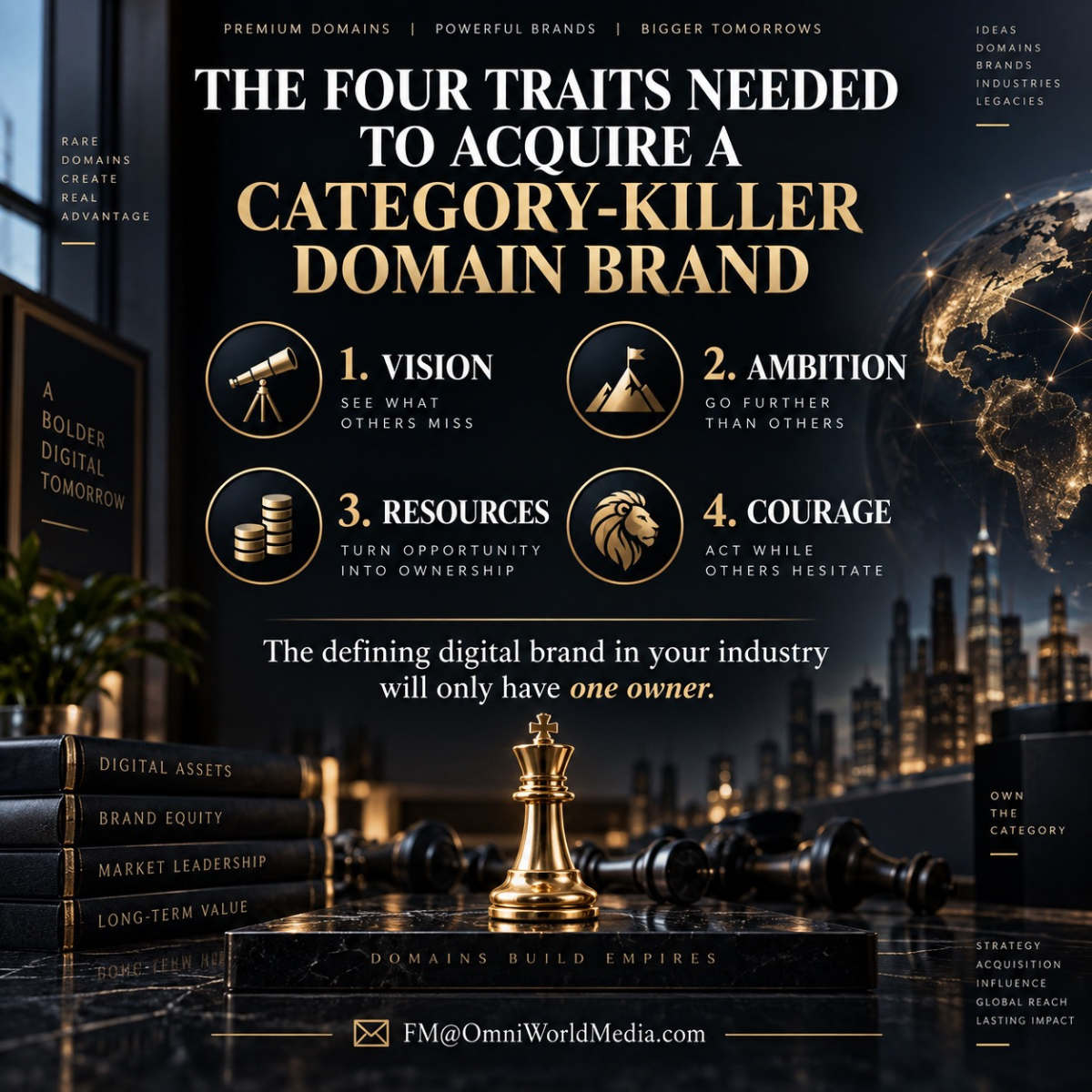
September 18, 2026 – 𝗧𝗛𝗘 𝗙𝗢𝗨𝗥 𝗧𝗥𝗔𝗜𝗧𝗦 𝗡𝗘𝗘𝗗𝗘𝗗 𝗧𝗢 𝗔𝗖𝗤𝗨𝗜𝗥𝗘 𝗔 𝗖𝗔𝗧𝗘𝗚𝗢𝗥𝗬-𝗞𝗜𝗟𝗟𝗘𝗥 𝗗𝗢𝗠𝗔𝗜𝗡 𝗕𝗥𝗔𝗡𝗗
After decades in the domain business — and being involved in seven- and eight-figure domain transactions — I have noticed something about the buyers who actually step up and acquire the defining digital brand for their industry.
They almost always possess the same four characteristics: 𝗩𝗜𝗦𝗜𝗢𝗡 + 𝗔𝗠𝗕𝗜𝗧𝗜𝗢𝗡 + 𝗥𝗘𝗦𝗢𝗨𝗥𝗖𝗘𝗦 + 𝗖𝗢𝗨𝗥𝗔𝗚𝗘.
𝟭. 𝗩𝗜𝗦𝗜𝗢𝗡 You have to see what your company can become, not simply what it is today. If you’re doing $30 million in annual revenue, can the right brand help you build a $300 million company? If you’re doing $100 million, can the right digital platform help you reach $1 billion? Vision means looking at a premium domain and not seeing: “That’s an expensive domain name.” It means seeing: The company you haven’t built yet. The traffic. The authority. The customer acquisition. The credibility. The partnerships. The fundraising. The eventual exit. Great founders see the outcome before everyone else sees it.
𝟮. 𝗔𝗠𝗕𝗜𝗧𝗜𝗢𝗡 You have to want more. A lot more. There is nothing wrong with building a good $30 million company. But some founders look at $30 million and immediately ask: “How do we get to $300 million?” Others reach $100 million and start thinking about $1 billion. Those are the founders who understand category-defining brands. They don’t want to simply compete in the category. They want to own it. They’re not satisfied being one of 50 companies fighting for attention, buying the same Google keywords and bidding against each other on Meta. They want the brand everybody remembers.
𝟯. 𝗥𝗘𝗦𝗢𝗨𝗥𝗖𝗘𝗦 At some point, somebody has to write the check. Premium assets require capital. But “resources” doesn’t necessarily mean having $10 million sitting in a checking account. It means having the ability to get the transaction done. Cash. Financing. Seller terms. Private equity. Investment banking. Strategic partners. Equity. Structured payments. Combinations of all of the above. The sophisticated entrepreneur doesn’t automatically say: “We can’t afford it.” They ask: “How do we structure it?” If the asset can materially change the trajectory of the company, resourceful founders find a way to take control of it.
𝟰. 𝗖𝗢𝗨𝗥𝗔𝗚𝗘 This may be the most important one. Because I promise you, somebody will tell you you’re crazy. “I would never pay that much for a domain name.” Fine. They don’t have to. Someone will say the money should be spent on advertising. Someone will tell you your existing brand is perfectly good. Someone will build a spreadsheet explaining why the acquisition makes them uncomfortable.
Whatever.
The founder has to make the decision. Not the spectators. Not the critics. Not the people who have never built what you’re trying to build. There are moments in business when you have to look beyond the immediate expense and understand the long-term strategic consequence of ownership. Then you have to have the courage to act.
Because category-killer domains have one characteristic that cannot be changed: There is only one.
Once your competitor owns it, the discussion is over. You can spend the next 20 years explaining why you didn’t need it. They’ll own it anyway. I’ve seen the buyers who complete major domain acquisitions.
They had Vision. They had Ambition. They had the Resources — or the resourcefulness — to structure the transaction. And when everybody around them had an opinion… They had the Courage to make the decision. I believe virtually every major category-defining domain acquisition requires all four.
So here’s the question I’d ask every founder: 𝗜𝗳 𝘁𝗵𝗲 𝘀𝗶𝗻𝗴𝗹𝗲 𝗴𝗿𝗲𝗮𝘁𝗲𝘀𝘁 𝗱𝗶𝗴𝗶𝘁𝗮𝗹 𝗯𝗿𝗮𝗻𝗱 𝗶𝗻 𝘆𝗼𝘂𝗿 𝗶𝗻𝗱𝘂𝘀𝘁𝗿𝘆 𝗯𝗲𝗰𝗮𝗺𝗲 𝗮𝘃𝗮𝗶𝗹𝗮𝗯𝗹𝗲 𝘁𝗼𝗺𝗼𝗿𝗿𝗼𝘄, 𝘄𝗼𝘂𝗹𝗱 𝘆𝗼𝘂 𝗿𝗲𝗰𝗼𝗴𝗻𝗶𝘇𝗲 𝘁𝗵𝗲 𝗼𝗽𝗽𝗼𝗿𝘁𝘂𝗻𝗶𝘁𝘆 — 𝗮𝗻𝗱 𝘄𝗼𝘂𝗹𝗱 𝘆𝗼𝘂 𝗵𝗮𝘃𝗲 𝘁𝗵𝗲 𝗰𝗼𝘂𝗿𝗮𝗴𝗲 𝘁𝗼 𝗮𝗰𝗾𝘂𝗶𝗿𝗲 𝗶𝘁? 𝗕𝗲𝗰𝗮𝘂𝘀𝗲 𝘀𝗼𝗺𝗲𝗼𝗻𝗲 𝘄𝗶𝗹𝗹.
Fred Mercaldo Founder, Omni World Media FM@OmniWorldMedia.com